
Specialties
Femoral Hernia Surgery
Femoral Hernia Surgery
Consultant Colorectal and General Surgeon in London
A femoral hernia occurs when abdominal contents—usually fat or part of the intestine—push through a weakened area in the groin just below the inguinal ligament, into the femoral canal. Femoral hernias are less common than inguinal hernias but have a much higher risk of strangulation (cutting off blood supply), making prompt surgical repair essential. Femoral hernia surgery is a safe and effective procedure that closes the defect, typically using mesh reinforcement, to relieve symptoms and prevent life-threatening complications.
Mr Nikhil Pawa is a specialist in femoral hernia repair, utilising open and laparoscopic techniques to achieve excellent outcomes with rapid recovery.
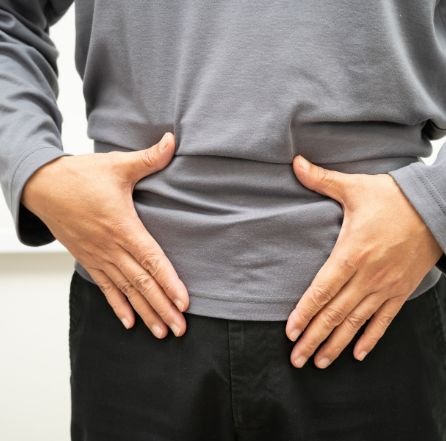
Benefits of Femoral Hernia Surgery
01
Prevents Strangulation
Elective femoral hernia repair eliminates the high risk of bowel strangulation—a surgical emergency with significant morbidity and mortality.
02
Laparoscopic (Keyhole) Option
Minimally invasive approach uses small incisions, leading to less postoperative pain, faster return to normal activities, and the ability to inspect the contralateral groin for unsuspected hernias.
03
Mesh Reinforcement Provides Durability
Mesh repair significantly reduces recurrence rates (below 1-2%) compared to primary suture closure.
04
Shorter Recovery Time
Most patients return to Most patients return to light work within 1–2 weeks after laparoscopic repair and 2–3 weeks after open repair.
05
Same-Day or Overnight Stay
The majority of femoral hernia repairs are performed as day-case procedures, allowing you to go home the same day.
06
Relieves Groin Pain & Discomfort
Surgery eliminates the dragging sensation, pain during walking or standing, and local tenderness associated with femoral hernias.
07
High Success Rate
With modern mesh techniques and Mr Pawa’s expertise, long-term success and patient satisfaction exceed 98%.
08
Performed by a Global Expert
Mr. Nikhil Pawa, renowned for expertise in laparoscopic and open hernia surgery, brings over 20 years of experience in high-risk groin hernia repair.
Our Process
Specialist Consultation
Your journey begins with a thorough consultation with Mr Nikhil Pawa, where your groin lump, symptoms, medical history, and activity levels are carefully reviewed. Femoral hernias are often small and easily missed, so a detailed clinical examination is essential.
Ultrasound or CT Diagnosis
We arrange a groin ultrasound (or CT scan if complex) to confirm the diagnosis, assess the hernia contents (fat vs bowel), measure the defect size, and rule out other causes of groin swelling (e.g., lymph node or saphena varix). This ensures accurate surgical planning.
Tailored Surgical Planning
If you are a candidate for surgery, we create a personalised plan—laparoscopic (TEP or TAPP) for bilateral, recurrent, or obese patients, or open mesh repair via a low groin incision—tailored to your anatomy, occupation, and recovery goals.
Surgery & Recovery
The procedure is performed under general anaesthetic. Laparoscopic repair uses three small incisions; open repair uses a single 3-5cm incision just below the groin crease. Most patients go home the same day, with simple pain relief and guidance to resume gentle activities within days.

Locations
FAQs
A femoral hernia occurs when abdominal contents push through the femoral canal—a natural weakness just below the groin crease. It is more common in women and has a high risk of strangulation.
Through a small incision in the groin (open) or small incisions in the abdomen (laparoscopic), the surgeon reduces the hernia contents and places a mesh to close the femoral canal defect, preventing recurrence and strangulation.
Femoral hernias have a 20-40% risk of strangulation (bowel becoming trapped and losing blood supply) over time, which is a life-threatening emergency. Elective repair is far safer than emergency surgery.
Laparoscopic repair offers less pain, faster return to work, lower recurrence, and the ability to repair both sides if needed. Open repair is simpler and can be done under local anaesthetic for frail patients.
You are a candidate if you have a diagnosed femoral hernia—whether symptomatic or not. Given the high strangulation risk, even asymptomatic femoral hernias should be repaired electively.
After laparoscopic repair, most patients return to desk work in 5-7 days and full physical activity in 3-4 weeks. After open repair, recovery is similar but may take slightly longer. Mr Pawa will give you personalised guidance.
Femoral Hernia Surgery in London
Expert Repair to Prevent Emergency Complications